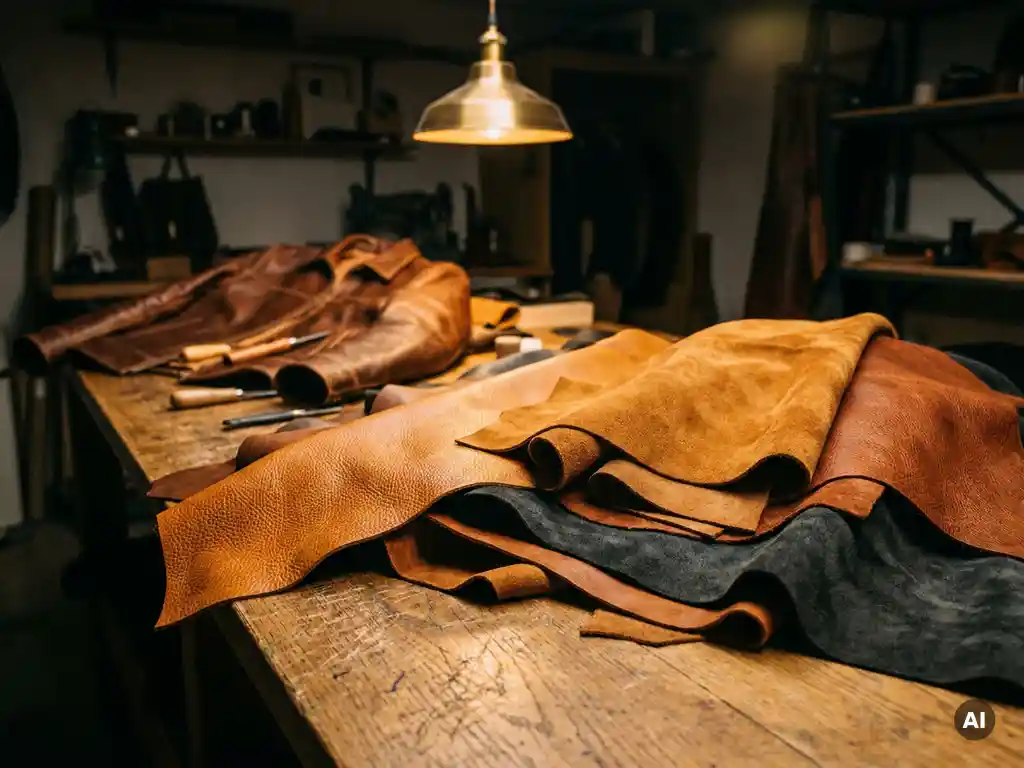
The best leather for a leather jacket is full-grain leather from cow, sheep or goat, depending on what you are looking for in terms of weight, suppleness and durability. Full-grain leather retains the original structure of the hide and, with proper care, lasts for decades. Choosing the right type of leather depends on how you will use the jacket, your preferred finish and the feel you want from it. Below, we answer the most frequently asked questions about types of leather and quality, so you can make a well-informed choice.
Which types of leather are most commonly used for jackets?
The most commonly used types of leather for jackets are cowhide, sheepskin leather and goatskin. Cowhide is sturdy and durable, sheepskin is softer and lighter in weight, and goatskin sits somewhere in between in character. Each type has its own texture, weight and feel when worn, and suits a different use or style.
- Cowhide: Robust, thick and highly resistant to wear. Popular for classic leather jackets and biker jackets.
- Sheepskin (nappa): Soft, supple and light. Ideal for jackets that feel comfortable from the very first wear.
- Goatskin: Slightly coarser in structure than sheepskin, but still supple. Used less often, but known for its natural grain pattern.
Besides these animal leathers, you will also see micro-suede and polyester suede-look fabrics appearing in jacket ranges. These materials offer a similar look to real suede, but are generally easier to maintain and suitable for those who consciously choose an alternative to animal leather.
What is the difference between full-grain leather and split leather?
Full-grain (or top-grain) leather comes from the outer layer of the hide, making it the strongest and most durable form of leather. Split leather is made from the lower layers that remain after the top layer has been removed. The difference in quality is significant and immediately noticeable in the lifespan of a jacket.
With full-grain leather, the natural fiber structure remains intact. This makes the material sturdier, more breathable and lets it develop a beautiful patina over time. With proper use and care, a full-grain leather jacket easily lasts for decades.
Split leather is more porous and less strong. It is often given an artificial coating to improve the surface, but that also makes it less breathable. A split leather jacket may initially feel similar, but it wears out faster and is more likely to crack or flake.
For a leather jacket that lasts many seasons, full-grain leather is the wisest choice. Split leather is cheaper to buy, but will need replacing in the long run.
What is the difference between aniline, semi-aniline and pigmented leather?
Aniline, semi-aniline and pigmented leather differ in the degree of finishing and protection applied to the leather. Aniline leather is the most natural and untreated, pigmented leather has the most protective coating, and semi-aniline sits exactly in between.
- Aniline leather: Dyed with transparent dye, without an opaque coating. The natural structure and markings of the hide remain fully visible. It feels the softest, but is more susceptible to stains and moisture.
- Semi-aniline leather: Dyed like aniline leather, but given a light protective layer. Combines the soft look of aniline with slightly more resistance to everyday use.
- Pigmented leather: Finished with an opaque pigment layer. This makes it more uniform in color, easier to clean and more resistant to wear. Less breathable than aniline leather, but much more practical in use.
For a leather jacket worn every day, semi-aniline or pigmented leather is a practical choice. If you want the most luxurious look and feel and are willing to devote a little more attention to maintenance, aniline leather offers the richest appearance.
Is nappa leather better than other leather for a jacket?
Nappa leather is not necessarily better, but it is softer and more supple than most other types of leather, which makes it particularly suitable for jackets that need to be comfortable to wear right away. Nappa is a finish applied to sheepskin or goatskin and is known for its velvety-soft texture and elegant drape.
The advantages of nappa leather for a jacket are clear: the material quickly adapts to the body, imposes no stiffness and gives the jacket a refined, premium look. Both black leather and brown leather look beautiful in nappa quality, because the soft structure absorbs the color nicely and deepens it.
The downside of nappa is that it is slightly more delicate than cowhide. It requires regular maintenance with a good leather cream and protection against moisture, and a leather protection set makes that routine easy. For someone who treats their jacket with care, nappa leather is an excellent choice. For those looking for a jacket that can also handle rough conditions, cowhide offers more resistance.
How do you recognize high-quality leather in a jacket?
You recognize high-quality leather by its even texture, natural smell, the suppleness of the material and the way the jacket hangs. Cheaper or split leather feels stiffer, smells more artificial and quickly shows small creases or a plastic-like surface when bent.
When assessing leather quality, look at the following characteristics:
- Smell: Real leather has a warm, earthy smell. Faux leather or low-quality leather often smells of plastic or chemicals.
- Bend test: Gently bend the material. High-quality leather recovers smoothly. Cheap leather stays creased or shows white streaks along the fold line.
- Cut edges and seams: On good leather jackets, the seams are neatly finished and the edges cleanly cut, not frayed or glued.
- Weight and drape: Quality leather has a certain weight and hangs nicely. A jacket that feels too light for its size is often made of thinner or split leather.
- Lining: Check the inside as well. A good lining and solid zippers are signs of overall craftsmanship.
Which leather lasts the longest in a leather jacket?
Full-grain cowhide lasts the longest in a leather jacket, provided you take care of the jacket regularly. The dense fiber structure of full-grain leather makes it particularly resistant to wear, tearing and deformation. With the right care, such a jacket can last for generations.
The lifespan of a leather jacket depends not only on the type of leather, but also on how it is cared for. Regularly conditioning it with a suitable leather cream prevents drying out and cracking, and our leather protection sets contain everything you need to keep your jacket in top condition. Store the jacket on a wide hanger, away from direct sunlight and damp spaces.
Sheepskin nappa leather lasts slightly less long than cowhide, but with good maintenance it can still be worn for years. Split leather has the shortest lifespan and is therefore the least durable option in the long term, even if the purchase price looks attractive.
Anyone who invests in a jacket made of full-grain leather in black or brown is choosing not only style, but also a jacket that can be worn again every season without losing its appeal.
How Donders 1860 helps you choose the right leather jacket
At Donders 1860, we understand that a leather jacket is an investment you don’t make lightly. More than 165 years of craftsmanship lie behind every garment we offer. Our range is aimed at style-conscious men who prefer quality over quantity and are looking for a jacket that lasts multiple seasons.
Here is what we do for you:
- We offer leather jackets in black leather and brown leather, finished in high-quality grades such as nappa and full-grain leather.
- Our range includes classic leather jackets, bomber jackets and sporty mid-season jacket styles that suit both casual and more dressed-up occasions.
- Besides leather, you will also find jackets in micro-suede and polyester suede-look for those seeking an alternative with the same look.
- We give concrete style advice and help you find the fit that suits your build and use.
- Our collection also includes bodywarmers and wool coats for those who want to build a versatile wardrobe.
Want to discover for yourself which leather jacket suits you? Then take a look at our full men’s range and find the jacket you will enjoy wearing for years.