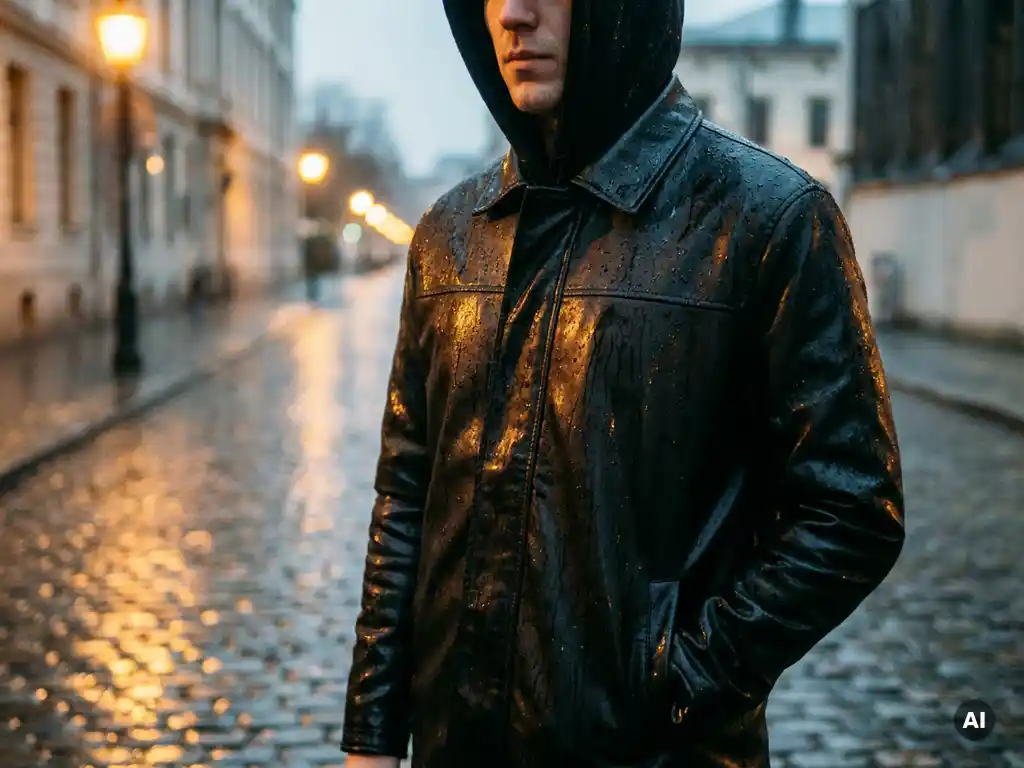
A black leather jacket can handle rain, but it is not waterproof. Leather is naturally slightly water-repellent, but during prolonged or heavy rain, moisture will still soak into the material. With the right preparation and care, you can protect your jacket well and keep it looking sharp for years.
In this article, we answer the most frequently asked questions about leather jackets and rain, from what exactly happens when leather gets wet to how to prevent and repair damage.
What happens to leather when it gets wet?
When leather gets wet, moisture soaks into the fibers of the material. This causes the leather to temporarily swell and change in structure. After drying, the leather shrinks again, but without proper care it loses its suppleness in the process. The result is leather that feels stiff, dry, and cracked.
Besides the structure, the appearance can also suffer. A black leather jacket can be left with water stains and streaks, especially if the water has not soaked in evenly. If it gets wet repeatedly without maintenance, the color fades and premature wear occurs.
Another factor: leather naturally contains fats and oils that keep the material supple. Water slowly washes these substances away. That is why it is so important to take good care of your jacket after every contact with rain. You can read more tips in our guide to leather jacket care.
Is a black leather jacket water-resistant or waterproof?
A black leather jacket is water-resistant, not waterproof. That is an important difference. Water-resistant means the material withstands a light rain shower or splashes reasonably well. Waterproof means no moisture can get through at all, and that does not apply to untreated leather.
The degree of water resistance varies by type of leather and finish:
- Smooth black leather naturally has a fairly closed surface and repels light rain well.
- Waxed or impregnated leather offers more resistance because the pores are sealed with a protective layer.
- Untreated or matte leather absorbs moisture more quickly and needs more protection.
By regularly waterproofing your jacket, you significantly increase its water resistance. But even then, in a real downpour or prolonged rain, moisture will eventually find its way in.
Can you simply wear a black leather jacket in the rain?
Yes, you can wear a black leather jacket when it rains, but not without preparation. A short rain shower or splashes are no problem for a well-maintained leather jacket. In persistent rain or a heavy downpour, it is wise to seek shelter or wear an extra rain layer.
A few practical guidelines:
- In light drizzle or a short shower, a waterproofed leather jacket holds up well.
- In persistent rain, we recommend letting the jacket dry at room temperature as soon as possible.
- Avoid staying in a wet jacket, as this prolongs the effect of moisture on the leather.
- Do not wear your jacket in a downpour without waterproofing treatment, as you risk permanent stains and warping.
With the right precautions, a black leather jacket is perfectly suited to changeable autumn weather.
How do you protect a leather jacket from rain?
You protect a leather jacket from rain by regularly waterproofing it and conditioning it with a suitable leather cream or leather oil. This seals the pores of the leather, so water is absorbed less quickly and the jacket stays supple. On our page with care products and maintenance tips you will find everything you need.
Follow these steps for good protection:
- Clean the jacket first with a soft, damp cloth to remove dirt and dust. Do not use harsh cleaning agents.
- Let the jacket dry completely before applying any product.
- Apply a waterproofing product suitable for smooth leather. Spray or rub it in evenly and let it soak in well.
- Then condition the leather with a leather cream or leather oil to keep it supple and prevent it from drying out.
- Repeat this two to three times per season, or more often if you regularly wear the jacket in the rain.
Always use products made specifically for the type of leather your jacket is made of. The wrong products can cause discoloration or surface damage.
What should you do if your leather jacket has gotten wet?
If your leather jacket has gotten wet, blot it dry as soon as possible with a soft cloth and then let it dry at room temperature. Hang the jacket on a wide hanger so it keeps its shape. Never use a dryer, heater, or direct sunlight to speed up the drying process.
After drying, follow these steps:
- Blot away excess water with an absorbent cloth. Do not rub, as this spreads the moisture and can cause stains.
- Hang up the jacket in a well-ventilated space, away from direct heat sources.
- Let it dry completely before storing it or waterproofing it again. This can take a few hours to a day.
- Then condition the leather with leather cream or leather oil to compensate for the moisture that has evaporated and keep the material supple.
- Check whether any water stains or streaks have been left behind. Treat these carefully with a damp cloth and a leather cleaner.
The faster you act after it gets wet, the smaller the chance of permanent damage.
How Donders 1860 helps you protect your leather jacket
At Donders 1860, we understand that a good leather jacket is an investment you want to protect. Our black leather jackets are made from high-quality materials that last for years with the right care. We help you in the following ways:
- Premium leather jackets with a sturdy, well-finished outer layer that is naturally water-repellent.
- Practical style and care advice so you know exactly how to keep your jacket in top condition, even in changeable weather.
- A wide range of black leather jackets, bomber jackets, and other styles suitable for a variety of weather conditions.
Looking for a leather jacket that combines style and durability? Browse our full range of men’s jackets and find the jacket that suits you.