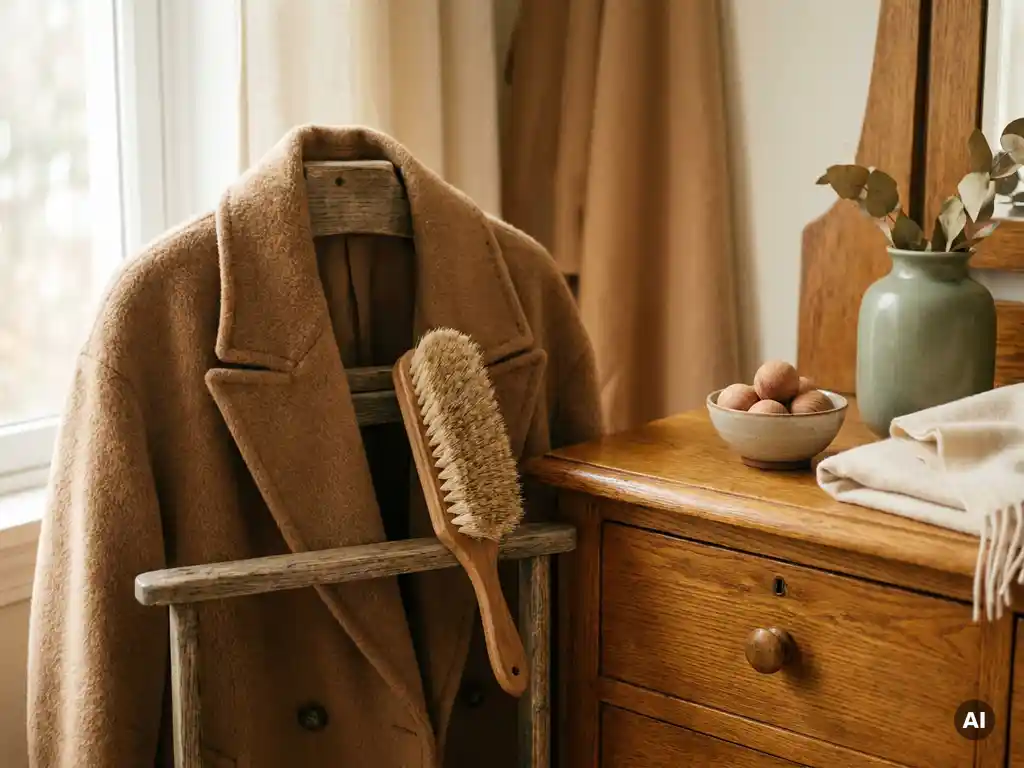
To care for a wool coat, wash it as little as possible, treat stains immediately, and store it the right way. Wool is a natural fiber that partly cleans itself, but if handled incorrectly it can quickly shrink or lose its shape. In this article, we answer the most frequently asked questions about wool coat care. You can find more tips for all your clothing in our coat care guide.
How do you wash a wool coat without damaging it?
Always wash a wool coat by hand or on a wool or delicates cycle at a maximum of 30°C (86°F), using a mild detergent made specifically for wool. Don’t use regular detergents, never wring the coat out, and let it dry flat on a towel. This prevents shrinking, felting, and loss of shape.
Wool is sensitive to heat, friction, and mechanical stress. As soon as you wash a wool coat too hot or put it in a spin cycle, the fibers contract and the damage is irreversible. So always follow these steps:
- Check the care label before you begin. Many wool coats are only suitable for hand washing or dry cleaning.
- Use cold or lukewarm water of no more than 30°C, even when machine washing.
- Choose a dedicated wool detergent that protects the fibers and preserves the natural lanolin in the wool.
- Never wring out the coat. Gently press out excess water by laying the coat between two towels and pressing lightly.
- Let the coat dry flat on a clean towel, away from direct sunlight or heat sources.
Never hang a wet wool coat on a hanger. The weight of the damp fabric pulls the shoulders and sides out of shape.
Can a wool coat go in the dryer?
No, a wool coat does not belong in the dryer. The combination of heat and tumbling in a dryer makes wool fibers shrink and felt, sometimes after just one cycle. Always let a wool coat dry at room temperature, lying flat and away from radiators or direct sunlight.
Even a low dryer setting is too risky for wool. The heat, however low, speeds up the felting of the fibers. If you want to dry the coat quickly, place it on a drying rack in a well-ventilated room. Turn it over halfway through so it dries evenly and keeps its shape.
How do you remove stains from a wool coat?
Remove stains from a wool coat by treating them immediately with a clean cloth and cold water. Gently dab the stain from the outside in so you don’t spread it further. Never use hot water or rub hard, as this damages the wool fiber and makes the stain bigger.
For stubborn stains, there are a few proven approaches:
- Water marks and light stains: Dab with a damp cloth and let dry.
- Greasy stains: Sprinkle some cornstarch or talcum powder on the stain, leave it for an hour, and gently brush it off. Then dab with a mild wool detergent diluted in cold water.
- Wine or coffee stains: Dab immediately with cold water. Avoid hot water, as it sets the stain in the fiber.
- Chewing gum or solid residue: Place the coat in the freezer briefly so the substance hardens, then carefully break it off.
Not sure whether a stain will come out on its own? Take the coat to a professional dry cleaner. Experimenting yourself with strong stain removers can permanently damage the color or structure of the wool.
How often should you have a wool coat steamed or cleaned?
Have a wool coat professionally cleaned or steamed once or twice per season. Wool naturally repels odors and small bits of dirt, so you don’t need to wash it after every wear. Cleaning too often damages the fibers and shortens the life of the coat.
Steaming is a gentle way to refresh a wool coat. It removes odors, releases wrinkles, and restores the coat’s original shape without stressing the fibers. You can use a garment steamer at home or take the coat to a professional dry cleaner.
Airing is a good in-between solution. After wearing, hang the coat on a hanger overnight in a well-ventilated room. This removes most odors without you having to wash or steam the coat.
How do you store a wool coat correctly?
Store a wool coat in a cool, dry place on a wide hanger, or folded in a breathable cotton storage bag. Never use a plastic bag, as it traps moisture and encourages mold. Protect the coat from moths with cedar wood or lavender sachets instead of chemical mothballs.
For seasonal storage, there are a few more things to keep in mind:
- Always clean the coat before storing it. Stains and sweat attract moths and become harder to remove during long-term storage.
- Use a wide, sturdy hanger so the shoulders keep their shape. A thin wire hanger pulls the fabric out of shape.
- Choose a breathable storage bag made of cotton or linen, not plastic. Wool needs air circulation.
- Place cedar wood blocks or lavender sachets with the coat. This repels moths without using chemicals that can damage the fibers.
- Check the coat regularly for damp spots or moth damage, especially during long-term storage.
How Donders 1860 helps you care for your coats
For us, it’s not just about finding the right coat, but also about enjoying it for a long time. We understand that a good coat is an investment you want to wear season after season. That’s why we offer:
- Style advice and buying guides that help you make the right choice based on use, material, and fit
- Care tips specific to each material, from wool coats to leather and suede styles, which you can find on our page about coat care
- A wide range of premium coats for men, designed to last with the right care
Want a wool coat that keeps its quality for years? Browse our full range of men’s coats and discover which style suits you. Or visit the Donders 1860 webshop for the complete range.